
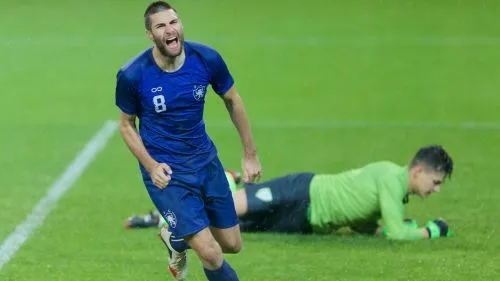
What kind of mindset do you bring to competition? And is that mindset different from the one you have when you train?
In this article, I’m going to go over the difference between a training mindset and a game mindset, and how you can leverage both to reach your full potential.
Understanding the Two Mindsets
On a recent coaching call, I was discussing this idea of separating the way we think about practice from how we think about competition. The reason this came up was because the athlete I was working with was focusing way too much on his statistics during competition.
This is a common challenge I see. If we look at anxiety, fear, perfectionism, self-doubt—these all stem from focusing too much on the result.
Now, we do have to accept the fact that results matter. We care about them. The result is what we’re after. We play because we enjoy the game, but also because we want to do well.
The challenge arises when we become so fixated on results that it creates problems—like forcing things during games, overthinking mechanics, and trying to think our way to good performance instead of trusting ourselves to just play freely.
To reach a point where we can let go and perform freely, we must have something to trust—and that comes from how we approach practice.
The Practice Mindset
A strong practice mindset is all about intentional improvement.
It’s having a clear purpose every time you train. That means being locked in, giving full effort, and focusing on what you want to get better at that day. This could involve physical skills or mental ones.
If you’re struggling to not care so much about results, ask yourself: “Am I giving as much effort, focus, and energy to practice as I do to games?”
We don’t want all our care and pressure to exist only on competition day. That pressure should be placed on ourselves during practice—but in a healthy way.
Not anxiety, but productive pressure—the kind that pushes you to lock in, improve, and work hard.
Example of a Practice Mindset
An athlete enters practice with clear goals or intentions for that day. These are process-oriented goals—maybe working on a technical part of their game or a mental skill.
Throughout practice, they constantly check in:
-
Am I doing this well?
-
Do I need to make an adjustment?
They stay present in each drill, evaluate afterward, and make simple, specific changes before continuing. After practice, they reflect on how it went and decide what to improve next time.
There’s more thinking involved in practice—because this is the time to figure things out. It’s when you test cues, make adjustments, and experiment.
A golfer working on chipping at the range might hit a few shots, notice the loft is off, and make a small adjustment. Then they test a new physical cue. Swing after swing, they fine-tune what works. The same process applies in every sport.
Practice is where you think through mechanics, experiment, and learn what works best for you.
The Game Mindset
When it comes to performance, things shift.
In competition, you are as good as you’re going to be that day. Everything you’ve done in training is now primed to be unleashed.
The biggest mistake athletes make is trying to fix things mid-performance. Of course, small adjustments can happen, but in general, competition isn’t the time to fix—it’s the time to trust.
A performance mindset is characterized by presence.
You’re in the moment, allowing yourself to play freely and let all the work you’ve done show through.
The problem is that when you’re overly focused on results, you start to overthink, which leads to forcing things.
Now, I want you to try hard in terms of effort and focus—but not in terms of overthinking. Because overthinking slows you down, especially in sports that require quick reactions.
Example of a Game Mindset
A tennis player who focuses too much on their swing technique will slow their reaction time just enough to throw off their timing. Even if they know what to fix technically, it won’t work because they’re thinking instead of reacting.
In reaction-based sports, being present and trusting yourself improves timing and flow.
In non-reaction sports like golf, overthinking still breaks rhythm and comfort. Many golfers I work with say, “I was overthinking my swing and didn’t feel comfortable.”
That’s why in competition, you must let go of the need to control mechanics or outcomes.
Be athletic. Be in the moment. Play freely.
Bringing the Two Mindsets Together
It’s very difficult to trust yourself enough to play freely in competition if you haven’t done the work in training.
Confidence and trust come from consistent, focused effort in practice.
If you want to perform freely, you must earn that freedom through hard, intentional practice.
That’s where you fine-tune your skills and build trust in your preparation.
So, when people talk about “letting go of the result,” it doesn’t mean you stop caring.
It means you focus your energy where it matters most—being present and trusting yourself in competition, after putting in the right kind of work in practice.
Final Thoughts
If you care about performing well, you must develop both mindsets:
-
A training mindset that’s focused, intentional, and improvement-driven.
-
A game mindset that’s free, present, and trusting.
That combination is what will help you reach your full potential.
If you’re interested in learning more about my one-on-one coaching program, click here to schedule a free introductory coaching call, or fill out the form below to learn more.
I’ve also created two online mental training courses for athletes:
And if you’re more of a reader, check out my books:
Thank you for reading and I wish you the best of success in all that you do.