Playing scared is one of the most common reasons athletes will underperform. And it has nothing to do with your physical skills. Because when you are scared of messing up, scared of getting injured, or scared of anything else when you play, this will lead to you holding yourself back and will keep you from performing up to your potential.
What Does It Mean to Play Scared?
So what does it exactly mean for you to play scared?
Well, I think the easiest way to define it is you holding yourself back. You don’t get involved as much. You play timid. You almost feel like you are tiptoeing through your performance, or you feel like you’re playing with your foot on the brake.
That’s something that I’ve had a lot of athletes tell me. They’ve used that term: “I’m just playing with my foot on the brake.”
All of this comes from that underlying fear because you’re scared of something that could potentially happen.
But the one thing we do know is that when athletes play scared, when they hold themselves back, they’re not in the mentality they need to be in in order to play their best.
Peak performance comes from playing freely, taking necessary risks, going out there and playing aggressively — not holding yourself back.
When you do hold yourself back because of certain fears, this is where you will find yourself underperforming. And it can become an incredibly frustrating cycle.
When you play with this type of fear and hesitation:
- You might not make decisions as quickly
- You might try to be too perfect
- You might pass the ball off
- You second guess yourself
- You question whether you’re in the right position
This leads to overthinking and constant self-doubt.
And this isn’t just about nervousness. All athletes feel nervous. You can even play well when you’re nervous.
What we are referring to here is this deep-rooted fear of consequence.
It doesn’t even matter what the consequence is. When you latch on to the idea that there’s some really negative outcome you want to avoid, that’s when fear shows up—and scared play follows.
The 3 Main Reasons Athletes Play Scared
There are many things an athlete could be scared of, but there are three main reasons why athletes tend to play with fear.
1. Fear of Making Mistakes
This is the most common one.
This fear can come from:
- Not wanting stats to drop
- Coach pulling you
- Coach yelling at you
- Parents yelling at you
When there’s a fear of making mistakes, that will result in you holding yourself back and playing scared.
I always tell athletes we have to identify the true thing you’re afraid of. It’s easy to say, “I’m afraid of making mistakes.” But the real question is why.
There’s a consequence you believe will happen if you make mistakes—and that’s what you’re really afraid of.
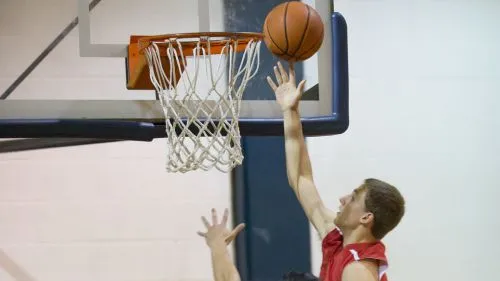
I was talking with a college basketball player recently who shared that he’s been holding himself back, not taking as many shots, and hesitating.
When we dug deeper, it wasn’t just about mistakes. It was about embarrassment.
His games are televised. There are a lot of people watching. If he makes a mistake, a lot of people will see it—and he’ll feel embarrassed.
So it’s not the mistake. It’s the embarrassment tied to it.
Another example is a high school shortstop I’m working with. He’s terrified of making errors because he believes his coach will get mad and either bench him or move him to the outfield.
Whether or not that would actually happen doesn’t matter. What matters is what he believes will happen.
That belief creates fear. And the fear creates scared play.
2. Outcome-Oriented Thinking
Another cause of scared play is outcome-oriented thinking.
Outcome-oriented thinking means you are focused on results.
If you’re afraid of mistakes, you’re already thinking about outcomes:
- What will happen if I mess up?
- I have to be perfect.
- I cannot let anything go wrong.
This can also show up in future-focused thinking:
- What team will I be on next year?
- Will I get recruited?
- Will I lose my opportunity?
There’s a baseball player I’m working with at a junior college who is getting D1 interest. The more he worries about blowing that opportunity, the more scared he plays.
And the more scared he plays, the worse he performs.
You can want an outcome. You can train hard for it.
But when you fixate on outcomes — especially the ones you want to avoid — your mind goes into protection mode.
Subconsciously, your brain thinks: “I need to keep myself safe.”
And that leads to holding yourself back.
3. Fear of Injury or Contact
The third reason is fear of injury or contact.
I see this a lot in contact sports.
This can come from:
- Being undersized
- Being worried about hurting others
- Coming off a recent injury
In sports like basketball, soccer, or lacrosse, contact isn’t mandatory — but avoiding it limits your effectiveness.
If you want to drive to the basket, take someone on one-v-one, or score, contact is unavoidable.
If you’re scared of injury, you’ll hold yourself back.
The Common Thread Behind Playing Scared
Across all three causes, the root is the same: Avoidance.
- Avoiding mistakes
- Avoiding consequences
- Avoiding injury
When you’re trying to avoid something, you will naturally hold yourself back.
That’s what scared play is:
- Hesitation
- Second guessing
- Timid decision-making
It all comes from the fear of negative outcomes.
How to Stop Playing Scared and Play With Confidence
If we know this, there are a few steps we can take to work through it.
Step 1: Practice Acceptance
This is huge.
There’s no benefit in beating yourself up for playing scared. That only puts you in a worse mental state.
It makes you feel weak. Inferior. Like something is wrong with you.
We have to accept:
- Yes, I’m scared of making mistakes
- Yes, I don’t want to get injured
- Yes, I’m scared of getting yelled at
Acceptance is the first step. You can’t move past something you refuse to acknowledge.
Step 2: Shift From Avoidance Goals to Controllable Process Goals
Scared play is driven by avoidance:
- “Don’t mess up”
- “Don’t miss”
- “Don’t embarrass yourself”
We need to switch that to what you want to do.
Instead of “I can’t make mistakes”, give yourself something controllable and specific.
For example, the basketball player who was passing up shots:
- His focus became: “Attack the basket.”
Not:
- “Don’t miss”
- “Don’t embarrass myself”
We accept those things could happen — but they no longer drive behavior.
If you’re a hitter in baseball:
- “Attack the ball”
Not:
- “Don’t strike out”
This is a simple but powerful mindset shift.
Step 3: Practice Aggression Through Mental Rehearsal
Games are the hardest place to work through fear.
That’s why mental rehearsal matters.
Visualize yourself:
- Attacking
- Being aggressive
- Playing free
Mental rehearsal conditions your brain to trust aggression.
Final Thoughts
If you can:
- Accept your fear
- Shift from avoidance to controllable process goals
- Practice aggression mentally
That’s how you begin going from playing scared to playing with confidence.
I know this is tough, which is why I do offer one-on-one mental performance coaching.
If you’re interested in learning more about my one-on-one mental coaching program, click here to schedule a free introductory coaching call.
Feel free to share this with any athlete who struggles with playing scared.
Thank you for reading and I wish you the best of success in all that you do.