
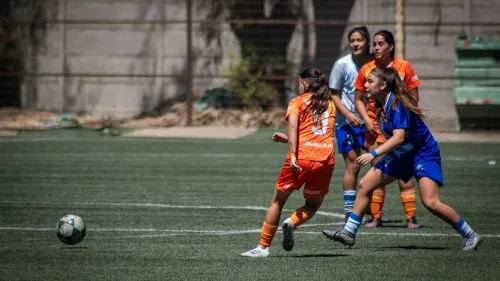
Sports are frustrating. Rarely do games go exactly as planned; mistakes happen, teammates mess up, and bad calls are made.
This can make it difficult for athletes, especially young athletes, to manage their emotions.
But when anger and frustration take over, games tend to spiral.
This is something I work on a lot in one-on-one mental coaching with athletes. I help them manage anger and frustration, so they can enjoy themselves more and play better.
In this article, I’m going to share some key tips I’ve applied that you can teach to your child, to help them manage anger and frustration during both practices and games.
Where Anger & Frustration Come From
When trying to understand what causes athletes to get frustrated, we need to understand the relationship between expectations and anger.
In sports, just as in life, anger stems from unmet expectations.
When we have an idea of how things should go, and then they don’t go that way, we get frustrated.
If your child goes into a game expecting themselves to play perfectly, and then they don’t, they’re likely to get angry.
If they think their teammates should make plays and not mess up, and then they mess up, they’re likely to get angry.
I worked with a soccer player who would get angry at his teammates during practice. In one of our coaching sessions, he told me, “They weren’t doing what I wanted them to.”
He had certain expectations that his teammates failed to meet.
What’s tricky about expectations is that they may not be clearly vocalized. Meaning, you may tell your child it’s okay to make mistakes, and they agree with you, but then lose their composure following a mistake.
The true expectations an athlete has reveal themselves in how they respond to mistakes and other situations.
The First Step in Helping Your Child Manage Anger in Sports
Since anger follows unmet expectations, the first step in helping your child manage their composure is to help them change their expectations.
Now, this doesn’t mean we’re going to lower their expectations. We’re not going to go from saying, “I can’t make any mistakes,” to, “It’s okay if I make two mistakes, but no more.”
We’re still in the same situation: the athlete is expecting something based on the result.
When we expect outcomes to happen, no matter if they’re big or small, we are focusing our expectations on things not 100% within our control.
So it’s not that we want to lower expectations. We actually want to completely change the type of expectation the athlete is setting.
I call these controllable expectations.
Expect What You Can Control
To help a young athlete manage anger better, they first must shift their expectations from outcome expectations (based on things out of their control) to controllable expectations.
This not only positions them to be more successful during the game, but it also helps them reset when something doesn’t go their way.
Resetting expectations is the foundation of managing anger in sports.
Yesterday, I asked a young athlete I’m working with if it would be fair for me to expect something of him that he couldn’t fully control.
He said no, it wouldn’t be fair.
If I expect him to do something that is not 100% within his control, and then I get mad at him if he doesn’t do it, I am setting him up for failure.
That is an unfair expectation.
But that is the exact type of expectation he places on himself. He expects himself to get a hit every time he’s up to bat.
Even if he has a phenomenal season and hits above .500, that still means he’s failing to reach his expectations.
This is why his parents are seeing him get so upset after games. He did not meet his expectations.
We discussed reframing his expectations to focus on the controllable parts of getting a hit. He said he needs to…
- Time up the pitcher well on deck.
- Watch the ball at the plate.
- Be aggressive early in the count.
All three of those are things he can make sure he does. No matter the outcome of the at-bat, he can be sure he reaches his own expectations for the at-bat.
Those are also, coincidentally, three things that increase the chances of him getting a hit.
That’s a key characteristic of setting controllable expectations: you focus on the parts of the process that lead to success, even though they don’t guarantee success.
What you can do is sit down with your child and have them list out everything that’s in their control in their sport. Then have them choose a few to set as their expectations, instead of having their expectations focused on the result.
Helping Them Reset in the Moment
Resetting expectations is the first step in helping your child manage anger during games. The second step is helping them reset once frustration takes hold.
Even when they set expectations focused on what they can control, they’ll still feel angry when things don’t go their way. That’s normal. Our goal is to help them become more aware of when that occurs and learn to calm themselves down.
This is a two-part process.
The first part involves increasing their in-the-moment awareness. The second part is applying a resetting routine when they get angry.
Increasing Your Child’s In-The-Moment Awareness
Many times when I’ve asked young athletes about their frustration, and I ask them if they realized they were getting so mad in the moment or after the fact, they say after the fact.
We have to build this awareness in order for them to use a resetting technique. We need them to recognize that they’re getting angry. There has to be a part of their brain that says, “Hold on a second, my anger is taking control.”
Building this level of awareness takes time and patience. The best way to help your child build this type of awareness is through consistent practice.
- What you can do is have them write down the times they got upset during a practice or a game (you’ll do this together afterwards).
- Then, have them write what got them so upset.
- Third, have them write how they would have liked to respond.
This practice helps them build awareness, but also helps them think through how they would like to react differently in the future.
Using a Resetting Routine
While they’re building in-the-moment awareness, you want to have them begin practicing applying a simple resetting routine.
This will be a combination of breathing and self-talk.
Have them use count breathing as soon as they feel themselves getting upset. This involves them inhaling as they count to four in their head, and then exhaling through their mouth as they count to four again. Tell them to do this a few times.
Then, have them repeat a simple phrase like, “Let it go and focus on what I can control.”
Having your child remind themselves to focus on what they can control is a critical piece to this. When they’re angry, we can guarantee that what they’re angry about is not within their control at that moment.
They will either be angry at someone else or angry at a mistake they made. Either way, they cannot control the other person, and they equally cannot control the mistake since it’s in the past.
By reminding themselves to focus on what is within their control, they are taking their attention off whatever it was that upset them.
Again, this is a process and takes time for them to get really good at. But the strategy outlined above is the same one I’ve seen success with time and time again in my work with youth athletes.
Mental Coaching to Help Your Child Manage Anger in Sports
The strategy outlined above is effective, but also requires patience and consistent effort to make it stick.
Helping athletes develop the skills needed to move on from frustration and handle anger in sports is exactly what I work on within my one-on-one mental performance coaching program.
I will work directly with your athlete through a structured program to reframe expectations, help them focus on what they can control, and learn to reset more quickly in the moment.
If that is something you’re interested in, you can click here to learn more about my coaching program, or fill out the form below to reach out to me directly.
Thank you for reading, and I wish you the best of success in all that you do.